
Putting Purpose first truly drives profit to allow you to further scale your impact.
Start to learn how to do this in a real-world way.
Still Leading from Purpose
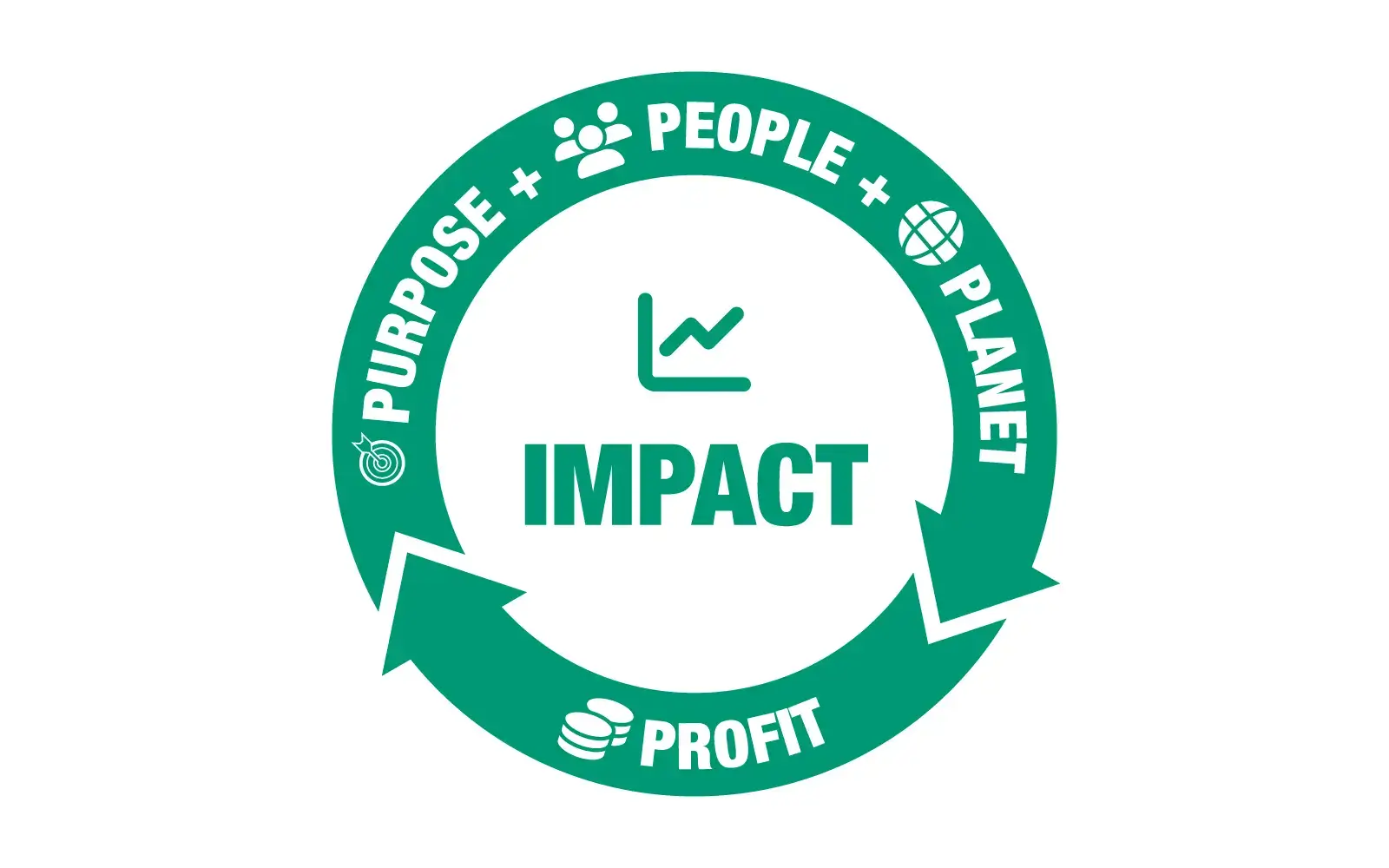
We live in fractious times, and many leaders are struggling with directional focus. As such, I felt it was beneficial and a particularly good time to repost this evergreen article, one of my 3 Core Insight philosophies, updated to “Still Leading From Purpose” – the others being “Be Ready for Open Leadership” and “Cascading Leadership”.
At the same time, I want to pay tribute to somebody who perfectly illustrates this philosophy – Pat Kramer, CEO of BDO Global. I worked with Pat as he took on the role of CEO of BDO Canada in 2015, and have looked on admiringly as he first led BDO Canada and then BDO Global with great success. I wish him all the very best in his future endeavours as he “goes out on top” towards the end of 2026!
It has long been mistakenly assumed that profit should be the primary driver for CEOs and other business leaders. Pat, and others I have worked with, have consistently shown that Leading from Purpose can and does scale your impact and, with strong focus on business principles, make the profits necessary for scale and not just shareholder enrichment. During the pandemic, he was kind enough to come on my podcast in early 2021 to discuss his experiences, including the golden quote:
“It’s been fundamental for us along the way that when you have a strong core purpose or a mission in your organisation, it binds your group together”
So, what do I mean when I teach “Leading From Purpose”?
Leading from Purpose – Why is it so important?
‘I run a business, not a charity’ is a common sentiment. But what if you approached this position from the other side? Paul Polman, outgoing CEO of Unilever, one of the world’s largest corporations, asked in Feb 2018:
“Why should the citizens of this world keep companies around whose sole purpose is the enrichment of a few people?”
Later that same year, Martin Wolf, chief economics commentator for the FT, wrote on Dec 11, 2018: “We must rethink the purpose of the corporation”. In a fascinating and prescient piece, he neatly expressed a theme which is key to my Leading From Purpose model:
“Profit is not itself a business purpose. Profit is a condition for — and result of — achieving a purpose.” In the years since then, the concepts of corporate responsibility and purposeful profit have become increasingly widespread and, dare I say it, expected.
Time for a New Triple Bottom Line
The phrase ‘triple bottom line’ was first coined in 1994, with those three drivers being people, profit, and planet. A lot has changed in the 32 years since, though, and so should the distribution of focus. Profit is absolutely necessary, as without it, you cannot scale impact as leaders nor grow the business. But it is not the ‘be all and end all’ it once was, with many consumers finding their own consumption and choices influenced by ethical, environmental, charitable, and sustainability concerns. People today are more informed than they used to be.
I clarified my focus on this way back in January 2019 (forward-thinking!) with the graphic above and the article: “Purpose, People, Planet. The new triple bottom line“. In brutally simplistic terms, if you were to buy a product or service and had to choose between two competing companies of equal cost and benefit to you, but one of those companies produces more ethically or with less wider detriment, which would you choose? It’s a no-brainer. And that’s exactly why corporations must take their public purpose seriously.
Putting it into Practice
I will reiterate: “Putting Purpose first truly drives profit to allow you to further scale your impact. Start to learn how to do this in a real-world way.” How do we achieve this?
1: Put Purpose First and Live it. Always.
Sounds obvious, but the first thing to do is put Purpose first. And I mean first.
It’s that simple. It’s a tough measure to hold to, though. As one of my mentors taught me, “Awareness is the greatest agent for change”. You can only begin to put Purpose first when you make yourself aware of it and the need for it. Let Purpose guide all decisions and be the first consideration of every choice, decision, and activity.
Related to this, though, don’t engage in “Purpose-washing”, “greenwashing”, or any other laundry-based variation of dubious ethicality. Just as there are eye-watering numbers of companies seeking to provide a smokescreen or moral gloss to their business practices, there are also companies and their leaders talking up a good story, yet underneath it all, there is a void of credible purpose. Sometimes it even feels that the better the story, the more toxic things are underneath the surface.
Finally, I baulk whenever someone says that Purpose, Culture, and Values are the “soft stuff”. No way. Leading from Purpose is not only hard, but it also creates the hardest and firmest maintenance measures possible, which contribute to the ongoing growth and success of such purposeful prioritisation. Act outside of the Purpose and Culture of an organisation, and the truly Purpose-led organisation will “spit out” those who behave in such a way. Purpose self-polices alignment, which can only be a good thing for the business.
2: Perfection is a Myth. Progress Isn’t. Always look to “Be More”
Be real about this. Don’t try to be perfect. The word “more” is really powerful (see my post on “Being More”). I support leaders at all levels, but my primary client focus lies with those leading large and complex international companies that are already operating at scale. It is key for those companies to recognise that they are on a journey to “Be More”. It is not possible, when one considers the complexities of life, to lead with purpose in every situation, totally, in every metric. That doesn’t mean you shouldn’t try, though, or that the pursuit of ’being more’ is not a worthy one.
In April 2019, in “Put People First and Do What is Right“, I wrote about one such client, Stantec, who I have found to be committed to always being more, to lead from their Purpose and Values. As noted in my other core article, “Be Ready for Open Leadership”, the CEO of Stantec, Gord Johnston, was recognised as CEO of the Year in Canada for 2025. Like Pat Kramer of BDO, Gord is a leader who leads from values and focusses on purpose and people. During his tenure, the market value of Stantec has also increased from CAD4bn to CAD18bn.
As a more recent good example, Patagonia’s Progress Report 2025 confirmed, in a shock admission, that “nothing we do is sustainable”. At least, not 100% sustainable. And yet, who could fault their pioneering and lengthy strides towards sustainability and ethical retail, having revolutionised modern retail and business practice? Their Purpose was a key, some may say critical, driver in their Profit and always trying to ‘be more’ was essential to this. Indeed, their founder, Yvon Chouinard, underlined that: “Businesses must exist to do more than provide a good service or make a quality product, and they definitely need to exist to do more than enrich a handful of individuals.”
3: There is a Place for Profit
Profit is not a dirty word. You must generate both profit and cash in order to survive, then thrive, then scale your impact – or no Purpose is possible. That is to say that it is ok to focus relentlessly on your financial numbers (as a recovering Chartered Accountant, of course I will be hard-nosed about this!) because, if you don’t, no matter how much you lead from purpose, it is of no value to you or the world if you go out of business!
What I propose, however, is a contemporary rewriting and reweighting of the Triple Bottom Line. Where previously Profit was deemed the primary focus, I believe a modern, effective conceptualisation to be Purpose, People and Planet, and I’m delighted to have the evidence that this works.
When you are ready to discuss a commitment to Purpose, talk to me so we can engage, and then you will see the Profit that follows.